Is the Hd 201 Still Good in 2026? Long-Term Review
Short answer: In my experience, the Sennheiser HD 201 is still a defensible pick in 2026—but only if you understand what it is: a very low-cost, no-frills pair of closed-back headphones that do certain things surprisingly well and other things poorly. If you want clean, reference-grade sound or high-end comfort, this is not it. If you want an inexpensive, durable-on-a-budget set for casual listening, gaming, or commuting, it remains useful.
Introduction — why I decided to keep using the HD 201
I bought a pair of Sennheiser HD 201 around six months ago because I needed cheap, reliable headphones for late-night TV, work calls, occasional travel, and quick mixing checks without having to babysit a fragile, expensive set. Over roughly half a year of daily use (commuting, long listening sessions at home, and several flights), I've put them through a lot: long playlists, podcast editing, gaming marathons, and the odd field recording playback. I wanted to see if such an inexpensive model could still feel useful in 2026, when so many affordable models have improved in comfort and sound quality.
What I looked for and how I tested them
I judged the HD 201 on several practical metrics: comfort for multi-hour sessions, build quality and durability after months of use, passive isolation in noisy environments, sound balance across genres (acoustic, electronic, orchestral, hip-hop), suitability for casual mixing or monitoring, and whether modest tweaks (EQ, pad swap) would make meaningful improvements. I compared listening impressions against my daily reference headphones at different price points to get context—this wasn't formal lab testing, but repeated, real-world use over months gives a practical picture.
Detailed review and analysis
First impressions were immediate: these headphones feel lightweight and unassuming. The clamping force is moderate—enough to stay put during commuting but not so tight that my head hurt after an hour. The ear pads are thin and the foam compresses over time; after a few months I noticed the pads getting a little flatter, reducing comfort on very long sessions. The headband is plastic and low-profile, but it has held up to daily adjustments and a couple of knocks in my bag without structural failure. I did notice a small creak from the adjustment mechanism after heavy use, but nothing catastrophic.
Sound wise, the HD 201 delivers a characteristic budget-friendly presentation: emphasized low end, pushed treble for presence, and recessed mids. What that means in practice is bass-first tracks—hip-hop, EDM, movie sound effects—sound engaging and satisfying. Kick drums have punch and low synths have weight. That said, the bass tends to bloom and can swamp detailed midrange information: vocals and acoustic guitars lose nuance and can sound a little distant unless I dial in some mid boost with EQ.
The treble is serviceable for clarity, but on busy mixes it can feel slightly harsh at times, especially with bad recordings or strongly compressed streaming tracks. The imaging and soundstage are narrower than open-back or higher-end closed-back headphones; spatial cues are present but not detailed. For gaming, positional cues work well enough for general directionality, but don't expect precision competitive players demand.
Find top-rated Audio & Headphones products at great prices.
View Offers →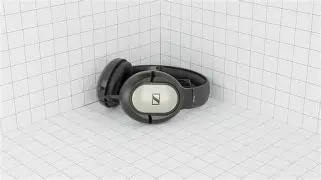
Isolation is better than lightweight open-backs—I could tune out subway noise fairly effectively at modest volumes. That passive isolation made them very practical for travel and late-night listening. Because they are easy to drive (low impedance), they worked fine straight out of smartphones, laptops, and inexpensive DACs. I tried a small USB DAC and noted only modest improvements—the HD 201 will not reveal the full benefits of a high-end amp, but a little EQ from a phone app or desktop software helps a lot.
Durability surprised me. For the price point, the plastic build feels thin but not fragile. The cable is fixed and non-detachable, which is a real downside: after several months of winding and transport I baby-sat the cable to avoid tangles and wear. The jack and cable have remained functional, but if you're rough with cords I recommend being mindful; replacing the whole headphone for a frayed fixed cable is a frustration many budget owners have mentioned to me in chats and forums.
Everyday usability — what I appreciated
- I appreciated how light they are for long sessions; despite thin pads, my ears didn't become pinned painfully.
- They are robust enough to toss in a daypack for travel without worrying about immediate breakage.
- Bass lovers will find them fun: low-frequency content is strong and satisfying without an external subwoofer.
- They are plug-and-play with phones—no amp needed, which is handy when I'm traveling.
- They make a reliable "workhorse" set for non-critical listening and notes playback while editing podcasts.
What bothered me (real owner annoyances)
- The fixed, non-detachable cable is inconvenient and feels cheap compared with modern budget sets that offer detachable cables.
- Pads are thin and flatten with time—after months the comfort for truly long sessions is noticeably reduced.
- Mids are recessed in the default tuning; vocals and acoustic instruments lack presence unless I EQ them up.
- The plastic headband is fine but creaks occasionally after heavy use, and the ear pad glue/attachment can loosen if stressed.
Pros & Cons
Pros
- Great value for casual listening: punchy bass and clear treble make music enjoyable without spending much.
- Lightweight and portable: comfortable enough for commuting and travel.
- Easy to drive: works directly with phones and laptops—no amp required.
- Durable enough: survived months of daily use and travel for me.
Cons
- Thin ear pads: comfort declines over long-term use unless you replace pads.
- Non-detachable cable: increases the risk of irreparable damage if the cable fails.
- Recessed mids: not ideal for vocal-focused listening or critical mixing.
- Narrower soundstage: less spatial detail compared to open-back or mid-range closed-back headphones.
Comparison: HD 201 vs common alternatives (2026 context)
| Model | Type | Sound Signature | Comfort / Build | Best For |
|---|---|---|---|---|
| Sennheiser HD 201 | Closed, over-ear | Bassy, bright treble, recessed mids | Lightweight, plastic, thin pads | Budget listeners, travel, casual gaming |
| Audio-Technica ATH-M20x (or M30x) | Closed, over-ear | More balanced than HD 201; tighter bass | Sturdier, thicker pads | Beginner monitoring, podcasting, studio practice |
| Sony MDR-7506 | Closed, over-ear | Neutral-centric, detailed mids | Foldable, durable, coiled cable on some versions | Field recording review, broadcast, professional use |
| Sennheiser HD 599 (or other open-back) | Open, over-ear | Wide soundstage, balanced | More premium pads, comfortable long-term | Home listening, mixing, audiophile purposes |
This table summarizes how the HD 201 sits in 2026: still a very inexpensive, fun-sounding pair, but less refined and less durable in the long-term comfort department compared with slightly more expensive rivals.
Practical tips and buying guide
If you're considering the HD 201 today, here are the practical things I wish someone had told me before I bought mine.
Who should buy the HD 201?
- You want a very cheap, lightweight pair to use casually and you don't care about detachable cables or premium pads.
- You prioritize punchy bass and fun sound over studio accuracy.
- You need headphones that will survive being tossed in a bag and used on commutes without worrying about expensive repairs.
- You want a no-AMP-needed headphone for quick plug-and-play with phones and laptops.
Who should avoid them?
- If you do mixing or critical listening, the recessed mids and boomy low end will mislead your decisions.
- If you want long-term comfort for marathon sessions, plan on upgrading pads or choosing a more plush model.
- If you want a detachable cable or Bluetooth flexibility, this model is not for you.
Buying checklist and recommended accessories
- Check cable condition closely when buying used—it's fixed and non-detachable.
- Consider investing in a pair of replacement pads (third-party pads can improve comfort and slightly change the sound).
- Use a basic EQ on your phone or desktop to lift the midrange around 1–3 kHz if you want clearer vocals.
- For long-term durability, treat the headband gently and avoid tight knots in the cable.
Simple mods that helped me
- Swapping to thicker replacement pads made long sessions much more comfortable and reduced treble harshness a bit.
- A mild mid boost (+2–4 dB) around 1–2 kHz in my phone EQ brought vocals forward and made acoustic music more natural.
- Using a small foam ear pad spacer (some DIY) improved isolation and slightly tightened the bass response.
Use cases where the HD 201 still excels in 2026
After months of daily use, the places where I found myself reaching for the HD 201 again were specific and repeated:
Discover deals on Audio & Headphones — updated daily.
View Offers →- Late-night TV and movies when I wanted immersive low-end without waking roommates.
- Travel and commuting when I needed something lightweight and disposable-friendly.
- Quick reference checks for podcast edits—just to hear overall balance, not critical EQ decisions.
- Gaming sessions where strong low-end effects add fun and presence.
Final thoughts and conclusion
In my experience, the Sennheiser HD 201 remains "good" in 2026 but in a narrow, practical sense. It delivers exactly what its price implies: enjoyable, bass-forward sound in a lightweight, inexpensive package. What surprised me was how useful that simplicity can be—after getting used to its tuning and swapping pads, I found it a reliable backup and travel pair I didn't worry about losing or damaging.
That said, the trade-offs are real: thin pads, a fixed cable, and recessed mids mean it's not a long-term replacement for a midrange reference or a comfortable studio headset. If your priority is musical fidelity, critical listening, or build features like detachable cables and swappable ear cups, there are better investments even at modestly higher prices. But if you want a cheap, fun-sounding, no-nonsense pair that works straight out of a phone and survives daily life, the HD 201 still earns its place in my bag in 2026.
Ultimately, whether it's "still good" depends on what you want from headphones. For me, after months of use and many small annoyances balanced against everyday usefulness, I'd buy them again as a secondary pair—but I'd also budget for replacement pads and treat the cable with care.